

Every weekend, millions of fans read match previews, check statistics and make their forecast on which team will win. Football prediction goes beyond calling a team to win based on their name or available players.
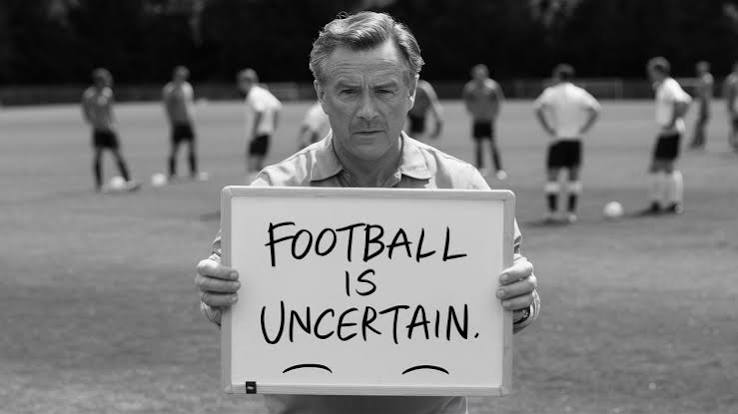
This is not a sign that match analysis doesn’t matter any more but It reflects that football is unpredictable even with the best team or data. Understanding why predictions fail helps you read them more sensibly and bet responsibly, whether you are following the game for fun or take a closer interest in match analysis. We offer you the best prediction to help improve your success.
Why Do Football Predictions Fail?
A prediction that worked for a particular team last Friday can fall apart by Sunday evening. A top league leader may lose at home, a relegation team grabs a draw, and the match preview studied by fans becomes useless. As a football fan you would be asking for the cause.
The honest answer from our expert is that predictions fail is that Some factors are built into the sport and no one can remove them. Others come from how predictions are made, read and judged, and those are things you can learn to spot with our guide.
Below are are reasons why football predictions fails:
The Limits of Data and Statistics: Modern analysis uses tools such as expected goals (xG), which estimates the quality of chances a team creates. These are valuable, but they are simplifications. They do not know whether a player was fatigued, whether the pitch was heavy, or whether a team deliberately slowed the game after scoring.
Sample size is another problem. Five or six matches can create a convincing-looking trend that disappears the next week. Statistics from a previous season may also say little about a team that has since changed its coach, style or key players. Data should inform your view, not replace judgement.
Referees, VAR and Marginal Decisions: Penalties, offside calls and red cards can swing a match, and they involve human judgement even with video assistance. Two referees may interpret the same challenge differently. Since a single penalty can decide a low-scoring game, officiating introduces another layer of uncertainty that no model can fully capture.
Injuries and Late Team News: A prediction is only as good as the information behind it. Football squads change constantly. A key striker may pick up a knock in the warm-up, a captain may be rested, or a manager may surprise everyone with an unexpected formation.
Team news often arrives about an hour before kick-off, and by then many previews have already been published. If you read a prediction written two days earlier, the lineup it assumed may no longer exist. Checking late news is one of the simplest ways to avoid being caught out.
Human Factors Cannot Be Measured Easily:Players are people, not numbers. Motivation, confidence, fatigue and personal circumstances all affect performance, yet few of them appear in a spreadsheet.
A team that has just changed managers may play with fresh energy. A side that has already secured its league position may relax. A squad returning from a long midweek trip can look heavy-legged. Derby matches and cup ties often throw form out of the window because the emotional stakes are higher. Analysts can estimate these effects, but none can measure them precisely.
Can Any Football Prediction Be 100% Sure?
If you have ever searched for a “sure tip” before a big match, you are not alone. The idea of a prediction that cannot lose is appealing, especially when the stakes feel high. But is it real?
The honest answer remains no. No football prediction can be 100% sure, no matter who forecaste it or how much data backs it.
Football is played by 11 players on both sites with the same feature making a total of 22 players in a pitch playing unscripted action for ninety minutes + stoggage time. Nobody can control how it will end or remove the uncertainty involved.
Upsets happen at every level. Champions lose to promoted sides, and teams with one shot on target sometimes win. If a certain result existed, bookmakers could not offer odds on it and the sport would lose its appeal. Any source claiming a certain outcome is either mistaken or not being honest with you.
What Does a Sure Prediction Mean?
When people search for a sure prediction, what comes to their mind is a pick with a very high chance of winning, or a tip someone claims is guaranteed.
At Bigwinpredict, it’s a high-probability pick. For example, a strong team playing a weak opponent at home may be a very likely winner. But “very likely” is not “certain”. Even a 90% chance means the outcome fails roughly once in every ten similar matches.
A “guaranteed” tip is a marketing claim, not an analytical one. Honest analysis always comes with uncertainty attached.
Why Do Big Teams Lose to Small Teams?
It is one of football’s most familiar surprises. A club with global stars and a huge budget travels to face a side fighting relegation, and goes home beaten. Fans call it a shock, pundits call it an upset, and the next day everyone searches for an explanation on what really happened and which player made the mistake.
There is rarely a single cause. Big-team defeats usually come from a mix of football logic, human factors and missed chances. Here are the main reasons they happen, and what they tell us about reading matches more sensibly.
Smaller Teams Often Play Differently Against Big Opponents
A small team rarely approaches a match against a giant the way it plays against its equals. Managers often adjust their plans to suit the occasion.
Common approaches include a compact defensive block that leaves little space between the lines, a disciplined shape that forces the opponent to play around it, and quick counter-attacks aimed at the space a dominant team leaves behind. When a big team holds the ball for long periods, it also pushes players forward, which can make it vulnerable on the break.
This is why possession alone can be misleading. Having the ball is not the same as creating dangerous chances, and a well-organised defence can turn long spells of pressure into little more than sideways passing.
Home Advantage and Atmosphere
Playing at a small club’s stadium can feel very different from a big club’s home ground. Loud, close supporters, tight pitch dimensions and an energised crowd can unsettle visitors who are used to much larger settings.
Home advantage is not as strong as it once was in many leagues, but it remains a factor. A small team that feeds off its crowd while the visitors struggle to find rhythm can swing a close game.
Early Goals and Game State
How a match unfolds often matters more than the starting lineups. If a small team scores early, the whole game changes. It can sit deeper, defend with confidence and make time-wasting and set pieces part of its plan.
The big team, now chasing the game, may take more risks, leave gaps at the back and become frustrated. Even strong sides can struggle to break down a defence that has settled into a rhythm and has something to protect.
Similarly, a red card, an injury to a key player or a tactical change at half-time can reshape the match in ways no pre-match analysis can predict.
How to Use Predictions Sensibly
You can still get real value from match analysis if you treat it correctly:
- Use predictions as one input. Combine them with your own research, recent form, lineups and context.
- Check team news close to kick-off. Late changes can alter the picture significantly.
- Look for the reasoning. A strong prediction explains why it reaches its view and acknowledges what could go wrong.
- Be wary of certainty. Phrases such as “sure win” or “guaranteed” are warning signs.
- Think about probabilities. Expect to be wrong some of the time, even when the analysis is good.
- Keep it in proportion. If you place bets, only use money you can afford to lose and never chase losses.
FAQs on Why Football Predictions Fail
- Why do football predictions fail?
Football is an unpredictable event, so one foul leading to a penalty or goalkeeping error can decide a match. Predictions can also fail because of human factors and bias. - Can any football prediction be 100% sure?
No. Even a strong team playing a weak opponent can draw. Anyone promising a guaranteed result is mistaken. - What does a “sure prediction”mean?
It means a match selection with a very high chance of winning.4. Why do big teams lose to small teams?
Smaller teams often defend deeply and make use of every opportunity. - Does possession mean a team will win?
No. Having the ball in position is not the same as making use of good chances to convert to goals, and a well-organised defence can absorb long spells of pressure. - How do injuries and late team news affect predictions?
Lineups are usually confirmed about an hour before kick-off, after many previews are published. A missing key player can make an earlier prediction outdated, so check team news close to the match. - Can expected goals (xG) predict match results?
xG helps show the quality of chances a team creates, but it is a simplified estimate. It can’t fully capture fatigue, tactics, pitch conditions or red cards. - How many matches should I look at before trusting a team?
There is no fixed number. Five or six games can create a misleading pattern, so consider opponent strength, home and away form, and whether the squad or coach has changed. - Do referees and VAR affect predictions?
Yes. Penalties, offsides and red cards involve human judgement even with video review, and one decision can decide a low-scoring game. No model can fully account for this.
Final Thoughts
Football predictions are not always accurate because football itself is unpredictable. Few goals, human emotion, tactical shifts, injuries, refereeing decisions and plain luck all shape results in ways no model can fully anticipate. That unpredictability is a large part of why the sport is so compelling.
The best approach is to treat predictions as informed opinions rather than claims. Read the reasoning, check the latest news, and accept that uncertainty is built into the game. At Bigwinprediction.com, we offer clear analysis that helps you understand a match better, not to claim that any result is certain.
18+ only. Please gamble responsibly. If betting stops being enjoyable, seek help from a support organisation in your country.
